In Hiring, I Watch What People Do
A GM with decades of restaurant knowledge on spotting people who care, why followership comes before leadership, and what keeping the wrong person costs.
I've got decades of restaurant knowledge, and I've hired and worked with people from just about every walk of life.
When I was younger, I gave everyone a chance and probably spent too much time listening to what people told me they were going to do.
Today, I pay more attention to what they're telling me without words than what they're trying to sell me.
One of the first things I watch is simple: Do they listen the first time, and do they take their time to get it right?
They don't have to know everything. I don't expect that. If I'm training someone, it's my job to teach them what I want them to know.
What I'm looking for is what happens next.
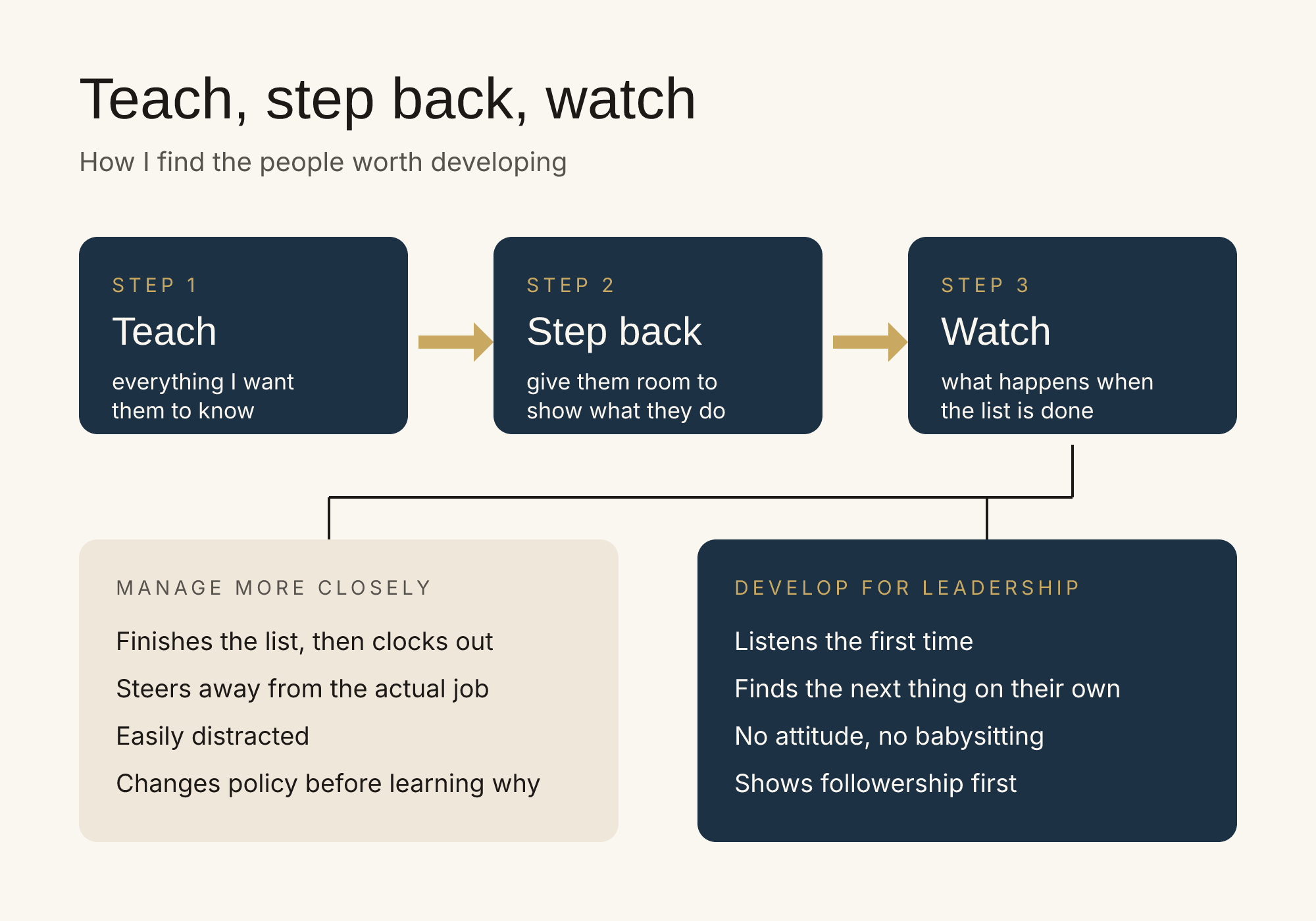
I teach them. Then I step back.
My approach is to teach someone everything I want them to know and then give them enough room to show me what they're going to do with it.
Do they complete the tasks they've been assigned?
More importantly, when those tasks are finished, do they see something else that needs to be done without somebody telling them?
That's usually when you start seeing the difference.
Some employees finish their list and mentally clock out. Others look around and find the next thing that needs attention.
Those are the people I notice.
Some things need correcting. Others tell you who someone is.
When you manage enough people, you learn that everybody has their own idiosyncrasies. Some things are difficult to change. Other things just need a little redirecting.
That's part of management.
But there are patterns I pay attention to.
If someone constantly steers away from the actual job for their own self-gratification, I know I'm probably going to have to manage that person more closely.
If they're easily distracted, that's another sign.
And if somebody comes in wanting to change established policies and procedures before they've taken the time to understand why we do things the way we do them, I've learned to pay attention to that too.
Those employees don't always make it.
You usually see it in the schedule first. That's one reason I track call-offs and no-shows instead of trusting my memory of who's been reliable.
The people I develop first
Then you have the other group.
They work to get the job done.
They aren't constantly distracted. They don't have an attitude every time something needs to be done. And they don't need me standing over them to keep moving.
Those are usually the people I start developing for leadership first.
Not because I've forgotten about everyone else.
It's because they've already shown me something that's hard to teach: followership.
They've demonstrated that they can listen, learn, execute and contribute to the goal before worrying about being the person in charge.
That's a pretty good foundation for a leader.
Can you hire people who give a damn?
That's the harder question.
I'm not sure you can always spot that during an interview.
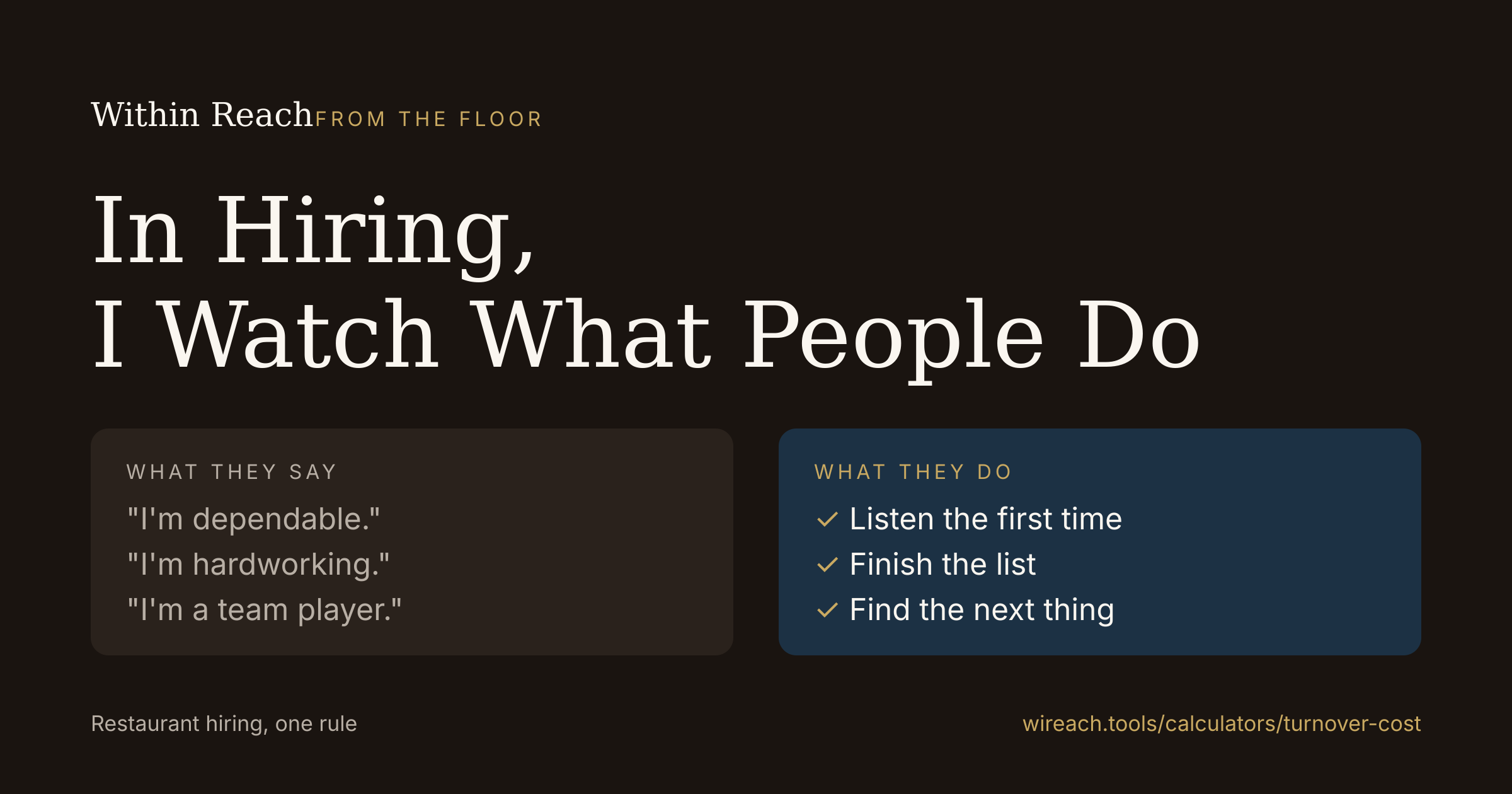
People know what they're supposed to say in an interview. They'll tell you they're dependable. They'll tell you they're hardworking. They'll tell you they're a team player.
After all these years, I'm less interested in what somebody is trying to sell me.
I watch what they do.
What I can do as a manager is give someone something to buy into.
Give them a piece of the goal.
Let them understand that this part belongs to them and that what they do with it matters to the rest of the team.
Then step back a little.
If they take ownership of that piece, appreciate the responsibility and start helping move the whole team forward, you've probably got somebody worth investing in.
If they can't appreciate the component they've been given, they may not be a good team member.
And sometimes the sooner you recognize that, the better.
Because keeping the wrong person doesn't just cost you frustration.
It costs training time, management time, extra shifts, overtime, lost productivity and eventually the cost of hiring and training somebody all over again.
In a business where people come and go as fast as the restaurant turnover statistics show, that adds up quickly. Most operators never sit down and figure out what turnover actually costs them.
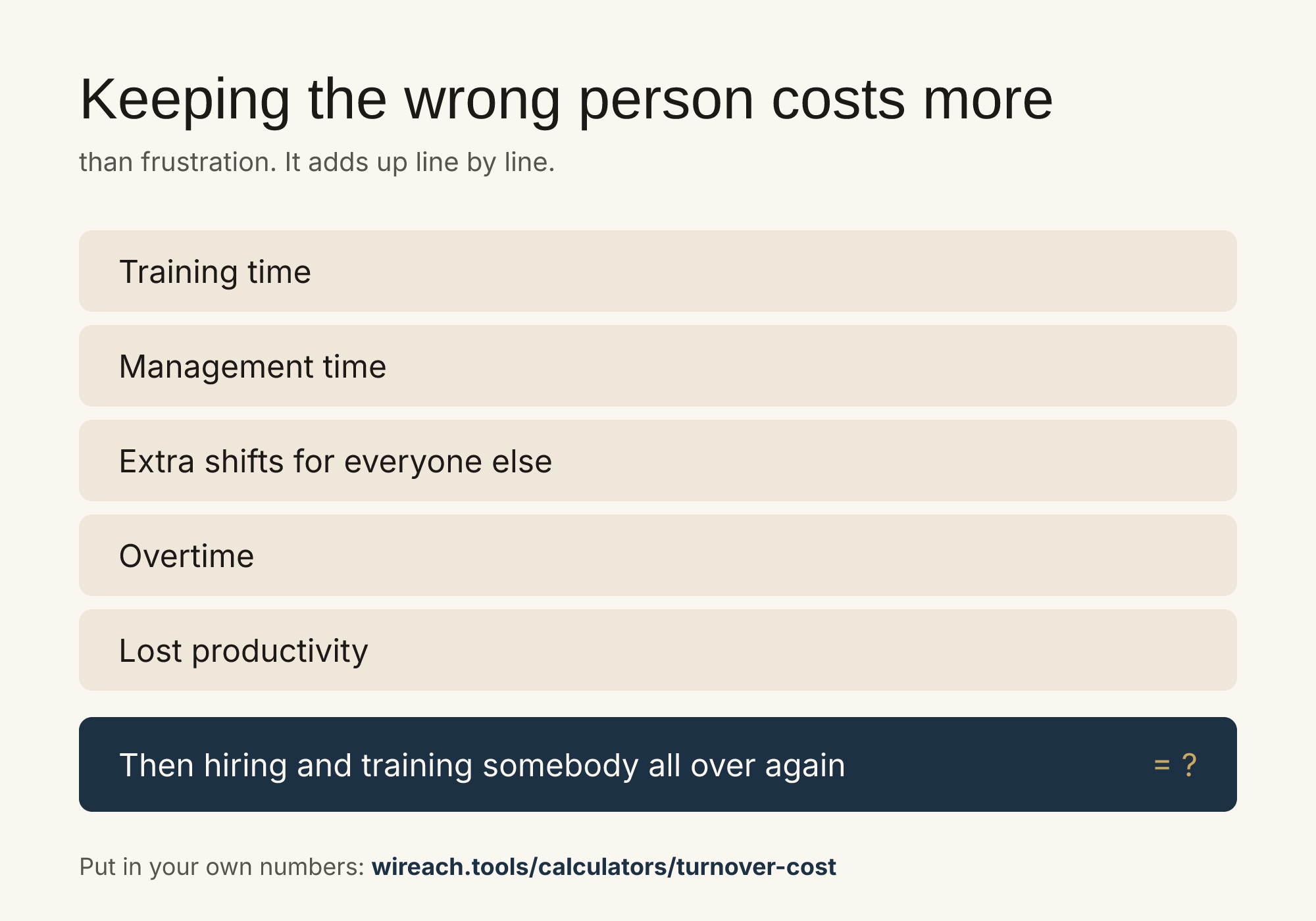
That's why I built the free Cost of Turnover Calculator. Put in your own numbers and see what losing and replacing one employee is actually costing your restaurant.